Light that never enters in quite the same way
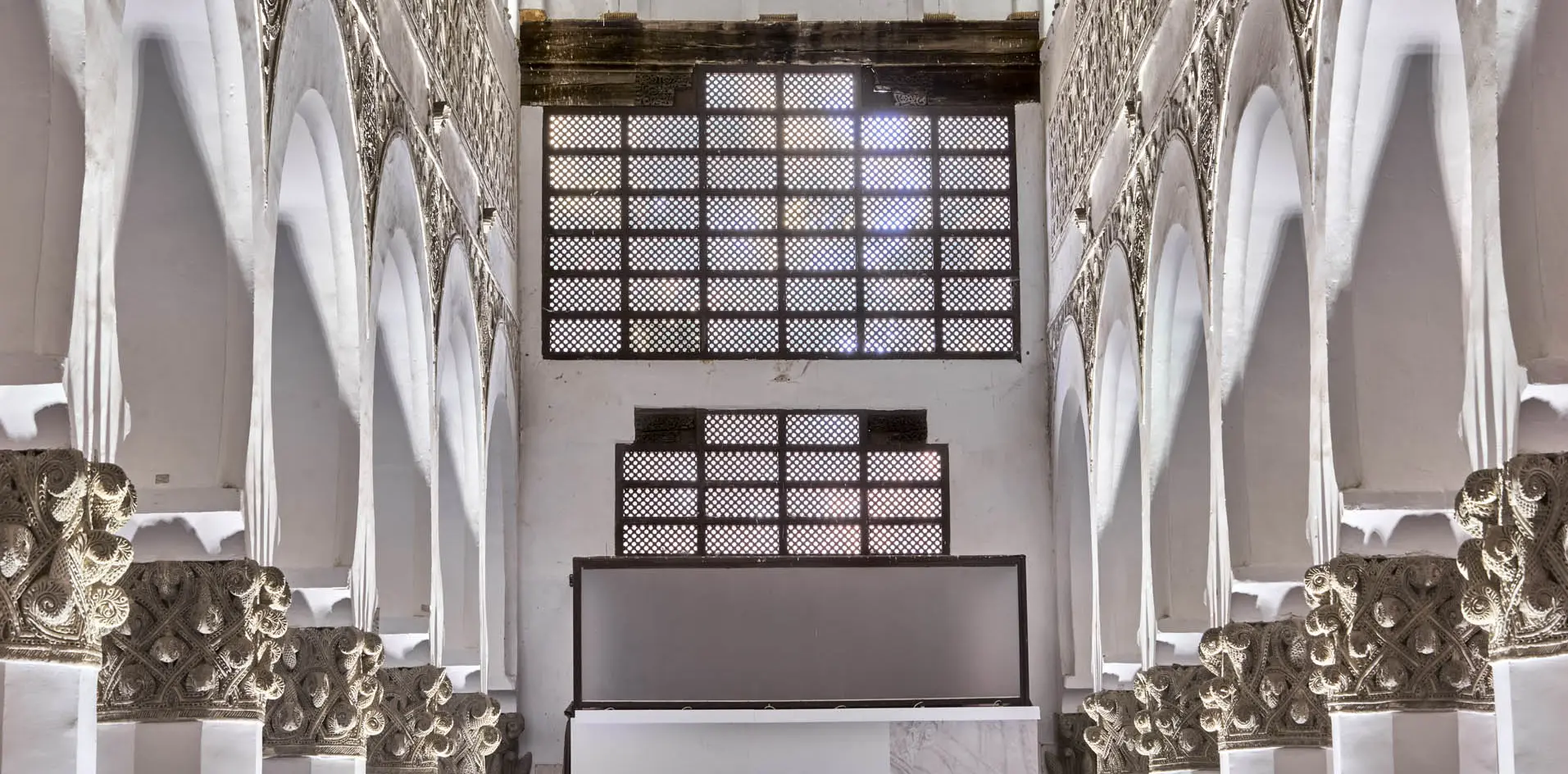
At Santa María la Blanca, light does not merely illuminate the space: it is also part of its beauty. The white of its columns and arches changes depending on the light, whilst the wooden latticework at the back filters the sun’s rays and casts abstract shadows onto the walls.
When light becomes geometry
Lattices are perforated structures that allow light and air to pass through without completely enclosing a space. They feature in various architectural traditions, particularly in Islamic architecture, and are linked to the ornamental style of Santa María la Blanca, a former synagogue in Toledo associated with the Mudejar tradition.
As it passes through its openings, the light is fragmented and casts patterns onto the interior surfaces. The result varies depending on the position of the sun and the intensity of the light, causing the monument to be perceived differently throughout the day.
Between the visible and the hidden
Lattices are not merely decorative elements. They filter light, partially restrict the view and create a transition between the exterior and the interior. This capacity has inspired symbolic interpretations relating to the boundary between the visible and the veiled, although not all of these can be attributed to a proven historical intention.
At Santa María la Blanca, light and shadow help reveal the depth of the naves and the details of their architecture. The latticework transforms natural light into a shifting element that enhances the experience of contemplating the building.
When you visit Santa María la Blanca, look up at the latticework and observe how the light passes through its geometric shapes. You will discover that architecture is not only built with walls, columns and arches, but also with the light and shadows that transform the space.
The Santa María la Blanca Synagogue is one of the seven monuments included in the Toledo Tourist Pass.


